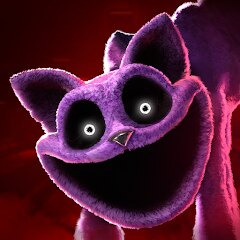
Poppy Playtime Chapter 3

100K+
Installs
Mob Entertainment
Developer
-
Adventure
Category
-
Teen
Content Rating
-
hello@mobentertainment.com
Developer Email
-
https://www.mobentertainment.com/privacy-policy
Privacy Policy
Screenshots
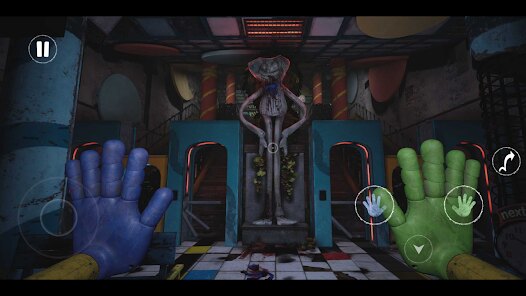
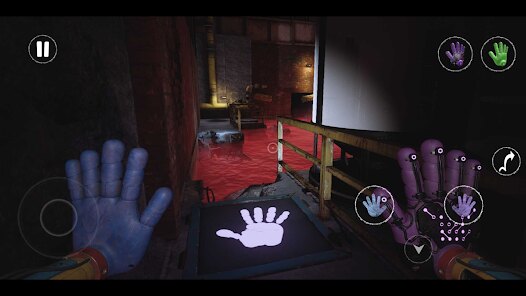
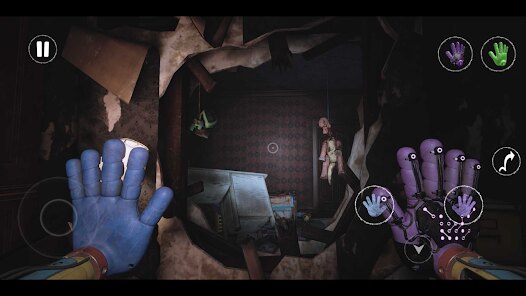
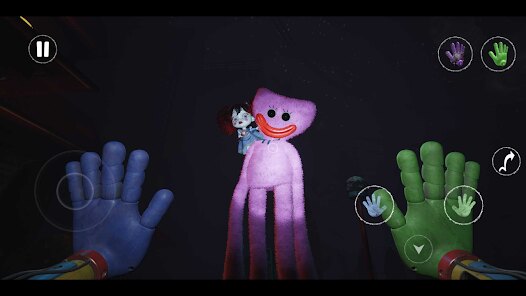
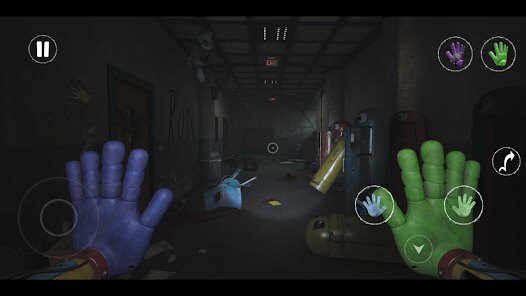
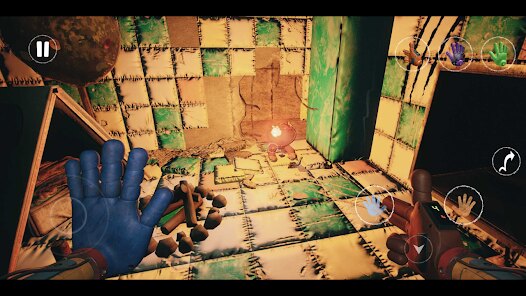
editor reviews
So, you're looking at Poppy Playtime Chapter 3, huh? Let me break it down for you as someone who's been knee-deep in horror games for years. This is a first-person survival horror puzzle game, the latest chapter in the Poppy Playtime saga. It's primarily a mobile game, but you can also grab it on PC via Steam, and it's available on consoles like PlayStation, Xbox, and Nintendo Switch. The first chapter launched back in 2021, making waves instantly. On Google Play, the Android version of Chapter 3 has clocked over a million installs at this point, and you can download the app for free. Yeah, it's free to download and play, but let's be real—there's a catch. There are in-app purchases, and they're not cheap. You're looking at paying around $7.99 to unlock the full chapter, which is standard for premium mobile ports. You'll also run into occasional in-app ads unless you purchase the full version, but they're not too aggressive in the free portion. It's a solid model for a mobile horror game, honestly. You can install it from Google Play or the App Store, and if you're on PC, just fire up Steam. The game's also available on Xbox Game Pass if you're subscribed, which is a nice bonus for console players.
Gameplay-wise, Poppy Playtime Chapter 3 drops you back into the abandoned Playtime Co. factory, and this time, you're dealing with a creepy new antagonist: CatNap. The core loop is classic horror—explore creepy environments, solve environmental puzzles, and run from terrifying monsters. You use the GrabPack, which is this handheld gadget that lets you pull objects, grab things from a distance, and power up certain mechanisms. The best part, hands down, is the atmosphere. The Playcare area is genuinely unsettling, with its twisted daycare and playground. My personal favorite part is the stealth sequences where you have to avoid CatNap. The AI in this chapter feels smarter than the previous ones; CatNap doesn't just follow a set path—it hunts you based on sound and line of sight. I remember hiding in a locker for a solid two minutes because I accidentally knocked over a toy. That tension is what keeps me coming back. The puzzles are also a step up from Chapter 1 and 2—they're more integrated into the environment, not just fetch quests. For instance, there's a part where you have to rewire a security system while a monster stalks you in the dark. It's nerve-wracking but satisfying when you pull it off.
If you've played other mobile horror games like FNAF: Security Breach or The Complex, you'll notice Poppy Playtime Chapter 3 takes a different approach. While FNAF relies on jump scares and stationary camera gameplay, Poppy Playtime is more about movement and exploration—you're actively navigating a 3D space. Compared to Hello Neighbor, which has clunky physics and frustrating AI, this game feels polished. CatNap's behavior is unpredictable but fair, and the puzzles don't feel like trial-and-error nonsense. I'd recommend this game over other horror titles because it strikes a balance between story and gameplay. The lore surrounding Playtime Co. and the toys is genuinely interesting, and the environmental storytelling is top-tier. You don't need to have played the previous chapters to enjoy this one, but you'll miss some context. For a free download on Google Play, this is a no-brainer for horror fans. Just be prepared to spend a few bucks if you want the full experience. It's worth it, though.
features
- Smart Enemy AI 🤖: Unlike Bendy and the Ink Machine, where enemies feel scripted, CatNap adapts to your actions. It searches rooms you've been in and reacts to noise, making stealth feel real. You can't just camp in a corner forever—you have to plan your moves.
- Integrated Environmental Puzzles 🧩: Most horror games, like Outlast, rely on hiding and running. This chapter forces you to solve puzzles under pressure. For example, you might need to align mirrors to redirect a beam of light while CatNap stalks the area. It's tense but rewarding.
- Atmospheric Sound Design 🎧: The audio is a standout feature. Footsteps echo differently depending on the surface, and CatNap's breathing gives you clues about its distance. Compared to FNAF, which uses loud jump scares, this game builds dread slowly. I've caught myself holding my breath during quiet sections because the sound design is that immersive.
pros
- Gripping Storytelling 📖: The lore in this chapter is deep. You learn more about the experiments at Playtime Co. through VHS tapes and notes scattered around. Unlike Little Nightmares, which is vague and symbolic, Poppy Playtime gives you concrete, creepy details. I spent hours piecing together the timeline of events.
- Polished Mobile Experience 📱: On Android, the game runs smoothly on most modern devices. The touch controls are responsive, and the graphics hold up well on a phone screen. The Complex struggles with performance on older devices, but this game maintains a steady framerate on my mid-range phone. For a free download on Google Play, that's impressive.
- Varied Horror Mechanics 🎭: This chapter doesn't just rely on jump scares. It uses psychological horror, like distorted nursery rhymes and visual glitches, to unnerve you. Granny, a popular mobile horror game, feels repetitive after a while because it's the same chase gameplay. Poppy Playtime Chapter 3 keeps you guessing with different enemy behaviors and puzzle types.
cons
- Short Playtime ⏳: Even for a full-price chapter, the game is short. I finished the main story in about three hours. Resident Evil 4 Mobile offers more content for a similar price. You can replay it, but there's no New Game+ or side modes to extend the experience. You're paying $7.99 for a few hours of scares, which feels steep.
- Occasional Controls Clunkiness 🕹️: On Android, the touch controls can be finicky during chase scenes. There were times when I tried to hide in a vent, but the character didn't respond because the button area was too small. FNAF: Security Breach on mobile handles controls better by simplifying interactions. This game asks for precision, which is tough on a phone screen without a controller.
- Repetitive Puzzle Design 🔄: Some puzzles feel recycled from previous chapters. For example, the "spin the wheel to open a gate" puzzle appears multiple times. The Room: Old Sins offers more inventive mechanics that evolve as you progress. Poppy Playtime Chapter 3 relies on the same few puzzle types, which can get tedious during long play sessions.
Articles
![]()
Guide
How to Update Google Play Store on Android 2026
![]()
Guide
How to Download Older Versions of Android Apps
![]()
Guide
How to Download Apps Without Google Play Store
![]()
Guide
What Is an APK File for Android?
If you use an Android phone, you may have seen the term APK while searching for apps or games online. Some websites offer an APK download instead of a Google Play install button. Some users also mention APK files when talking about apps that are not available in their region, older app versions, or Android games downloaded outside the Play Store.
![]()
Guide
How to Install Games from Google Play for Beginners
Installing games on an Android phone is usually simple, but for beginners, the process can still feel confusing at first. You may not know where to search, which button to tap, whether the game is safe, or why Google Play sometimes asks for account settings, storage access, or payment information. If you are using an Android phone for the first time, learning how to install games from Google Play is one of the easiest ways to get started.
![]()
Guide
How Useful Gemini Is for Everyday Questions and Quick Tasks
emini feels different from many AI apps because it is not only trying to be a chatbot. After using it for everyday questions, quick writing, image understanding, and planning, I think its biggest strength is convenience.
![]()
Guide
What to Know Before Downloading APKs
For many Android users, downloading an APK is a common way to install apps and games. Sometimes an app is not available in a certain country.
![]()
Guide
ChatGPT Review: Is It Still the Best AI App in 2026?
![]()
Guide
Seedance 2.0 vs Sora: The Future of AI Video Generation
The AI video race has intensified dramatically over the past two years. Platforms like Sora from OpenAI and Luma Dream Machine pushed the boundaries of text-to-video realism. Yet, despite their impressive outputs, most tools still operate as probabilistic generators—you describe a scene, and the model interprets it. Control remains limited. With the February 2026 release of Seedance 2.0, developed by ByteDance, the paradigm shifted. Internally known as Jimeng 2.0, Seedance does not position itself as just another video model. It positions itself as an AI Director. Rather than guessing what you want, Seedance 2.0 allows you to direct what happens. This distinction defines everything that follows.


Recommended Apps
![]()
My Supermarket Simulator 3D®
Game District LLC3.9

![]()
Fortnite
Epic Games, Inc4![]()
Poppy Playtime Chapter 3
Mob Entertainment4.2![]()
Diamond Painting ASMR Coloring
CrazyLabs LTD4.5![]()
Real Bus Simulator : Bus Games
Solo Studio Inc3.2![]()
Sprunki All Phases Beat Maker
Gotstar Studio0![]()
Looper!
Kwalee (Ltd)4.2![]()
Gugu Gaga Penguin: Mini Games
Kids Games LLC3![]()
KPop Demon Hunter Wallpaper
Highlights Devloper0![]()
Count Masters: Stickman Games
Freeplay Inc4.6![]()
Scary Teacher 3D
Z & K Games4.3![]()
Papa's Wingeria HD
Flipline Studios4.6![]()
Who's Your Daddy?!
Evil Tortilla Games Incorporated2.7![]()
AFK Arena
LilithGames4.6![]()
Hungry Balls
HYPERCELL4.6