
Waymo

1M+
Installs
Waymo LLC
Developer
-
Auto & Vehicles
Category
-
Everyone
Content Rating
-
app@waymo.com
Developer Email
-
https://support.google.com/waymo/answer/9184840
Privacy Policy
Screenshots


editor reviews
Waymo, developed by Waymo LLC, stands as one of the most advanced autonomous driving platforms currently available to the public. Rather than a conventional navigation app, it functions as a fully self-driving ride-hailing service, transporting passengers from point A to point B without a human driver behind the wheel. The application can be downloaded directly from Google Play and the App Store, though its availability remains limited to specific cities where the service has been officially launched. Since its gradual rollout, the app has seen a steady number of installations, reflecting the growing curiosity and trust in driverless technology. The service itself is not free, as fares are calculated based on distance and time, similar to traditional ride-hailing options. In-app purchases are not a factor, and the experience remains free of third-party advertisements, which keeps the interface clean and focused.
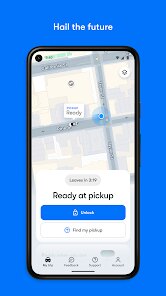
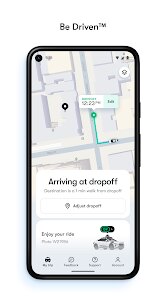
The core interaction with Waymo revolves around summoning a vehicle and then monitoring its arrival through a live map. Users set their pickup location by dropping a pin or selecting from suggested nearby points, and the app immediately displays the estimated wait time, vehicle details, and route preview. Once the car arrives, a tap on the screen unlocks the doors, and the journey begins. During the ride, the app presents a detailed real-time visualization of the surroundings, including traffic lights, pedestrians, cyclists, and other vehicles, which makes the experience feel surprisingly transparent. From my perspective, watching the car navigate complex intersections and handle unexpected situations with a steady, unhurried approach was genuinely impressive. There is a slight learning curve in trusting the vehicle at first, but the app\'s clear communication and the car\'s smooth driving quickly ease that hesitation. The cabin offers simple controls for temperature and music, but the true focus remains on the autonomous driving itself.
When compared to other ride-hailing services like Uber or Lyft, the differences are fundamental and immediately noticeable. Those platforms rely on human drivers, which introduces variability in driving style, vehicle quality, and conversation. Waymo eliminates that unpredictability entirely, offering a consistent and calm driving experience every time. From a design perspective, the app prioritizes clarity over breadth; instead of a range of services, it focuses solely on the ride, which makes its interface notably simpler and more straightforward than its competitors. In my observation, this minimalism works in its favor, as there is no clutter to distract from the essential task of getting from one place to another. However, the human element is missed in certain situations, such as when a driver would normally help with luggage or navigate an unclear pickup point. Still, for those who value predictability and a sense of technological wonder, Waymo stands apart from anything else on the market.
features
- The level of driving precision is remarkable. The vehicle maintains a safe distance, anticipates stops smoothly, and yields to pedestrians with a cautiousness that feels genuinely responsible. After a few rides, I found myself more relaxed than in many human-driven cars.
- Real-time 3D visualization of the car\'s environment is a standout feature. Viewing the world through the app\'s eyes builds trust and provides a fascinating look into how the vehicle perceives its surroundings.
- App communication is consistently clear. Notifications about pickup details, route changes, and arrival times are delivered promptly and without ambiguity, reducing potential confusion during each trip.
- Compared to other autonomous driving trials, Waymo\'s integration with the operating system feels more polished. The reservation process is swift, and the vehicle commands respond without delay, making the entire experience feel less experimental and more like a reliable service.
pros
- It removes the stress of navigating unfamiliar streets. The car handles all the decision-making, allowing me to focus on other things during the ride, whether that was work, reading, or simply enjoying the scenery.
- Driving consistency is a real benefit. I always know what to expect in terms of acceleration and braking, which makes rides feel calmer, especially during busy traffic hours.
- Disabled individuals who cannot drive may find this service particularly empowering, as it offers a level of independent mobility that was previously difficult to obtain.
- Safety is the primary practical advantage. The system never gets distracted or tired, and its reaction times are consistently fast, which offers a genuine sense of security.
cons
- Availability is still restricted to specific areas, which limits its usefulness for many people across the country.
- The fare structure can become pricey, especially during peak times, and I have occasionally found it to be higher than conventional ride-hailing services.
- There are times when the vehicle is overly cautious, such as making slower progress in complex traffic situations where a human driver would naturally be more decisive.
- Without a driver, assistance with luggage or handling unexpected route adjustments is not available, which can be inconvenient in certain scenarios.
Articles
![]()
Guide
How to Update Google Play Store on Android 2026
![]()
Guide
How to Download Older Versions of Android Apps
![]()
Guide
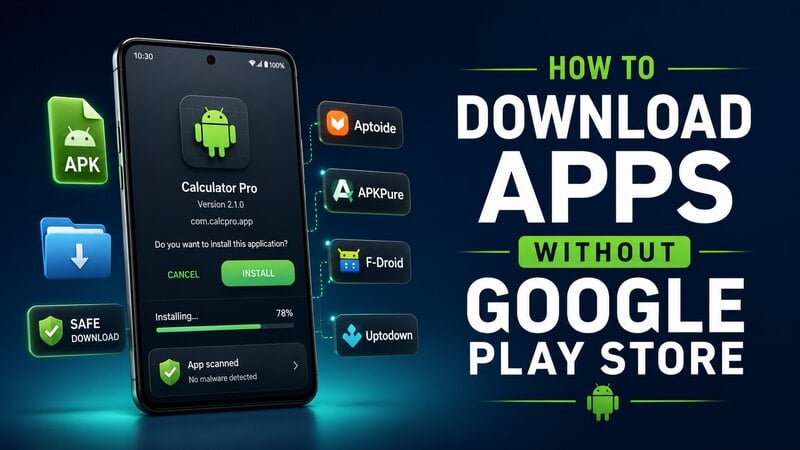
How to Download Apps Without Google Play Store
![]()
Guide
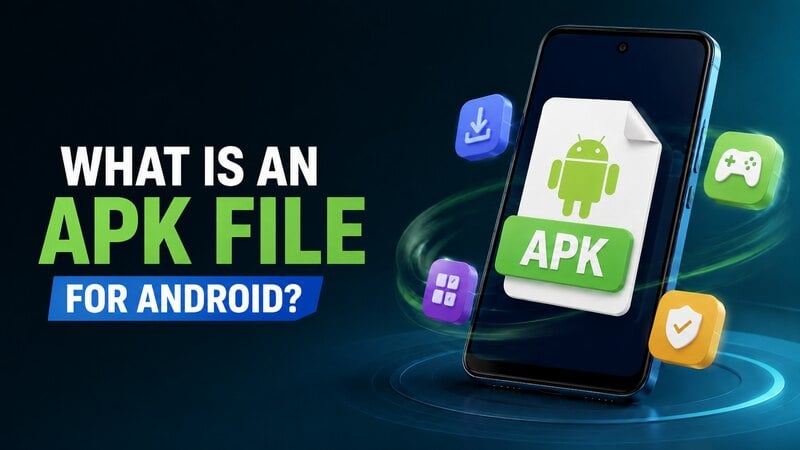
What Is an APK File for Android?
If you use an Android phone, you may have seen the term APK while searching for apps or games online. Some websites offer an APK download instead of a Google Play install button. Some users also mention APK files when talking about apps that are not available in their region, older app versions, or Android games downloaded outside the Play Store.
![]()
Guide
How to Install Games from Google Play for Beginners
Installing games on an Android phone is usually simple, but for beginners, the process can still feel confusing at first. You may not know where to search, which button to tap, whether the game is safe, or why Google Play sometimes asks for account settings, storage access, or payment information. If you are using an Android phone for the first time, learning how to install games from Google Play is one of the easiest ways to get started.
![]()
Guide
How Useful Gemini Is for Everyday Questions and Quick Tasks
emini feels different from many AI apps because it is not only trying to be a chatbot. After using it for everyday questions, quick writing, image understanding, and planning, I think its biggest strength is convenience.
![]()
Guide
What to Know Before Downloading APKs
For many Android users, downloading an APK is a common way to install apps and games. Sometimes an app is not available in a certain country.
![]()
Guide
ChatGPT Review: Is It Still the Best AI App in 2026?
![]()
Guide
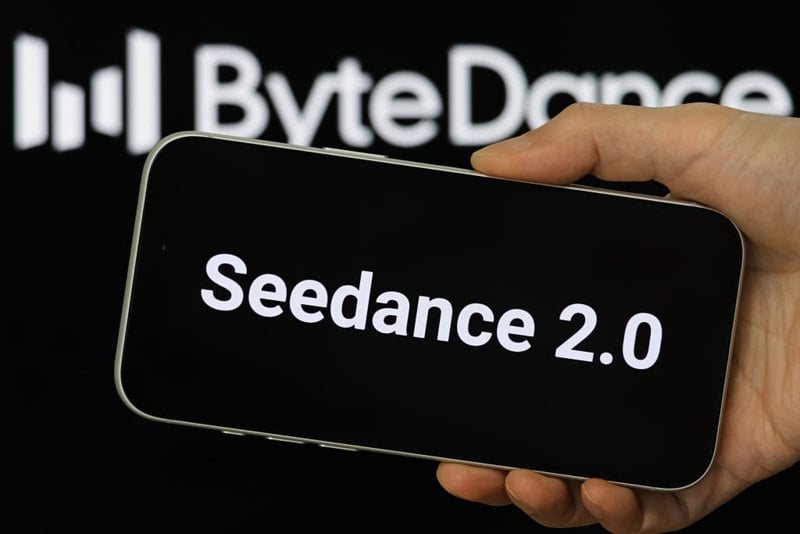
Seedance 2.0 vs Sora: The Future of AI Video Generation
The AI video race has intensified dramatically over the past two years. Platforms like Sora from OpenAI and Luma Dream Machine pushed the boundaries of text-to-video realism. Yet, despite their impressive outputs, most tools still operate as probabilistic generators—you describe a scene, and the model interprets it. Control remains limited. With the February 2026 release of Seedance 2.0, developed by ByteDance, the paradigm shifted. Internally known as Jimeng 2.0, Seedance does not position itself as just another video model. It positions itself as an AI Director. Rather than guessing what you want, Seedance 2.0 allows you to direct what happens. This distinction defines everything that follows.





Recommended Apps
![]()
Home Design 3D
Anuman4.2
![]()
Truth or Dare Game - Party App
Chouic4.8
![]()
Photo Collage Maker
Scoompa4.7![]()
Learn to Draw Flower
Creative APPS4.2![]()
FIFA World Cup 2026™
FIFA2.8![]()
Mirror Plus: Mirror with Light
Digitalchemy, LLC4.4![]()
Meitu- Photo Editor & AI Art
Meitu (China) Limited4.5![]()
Perplexity - Ask Anything
PerplexityAI4.7![]()
GhostTube SLS Camera Alternate
GhostTube4![]()
Boom Chip Blast: 2-Player
Black Pyramid 3D Games Studio0![]()
Healthy Benefits+
Solutran, Inc.4.5![]()
Deepcheck AI Search Assistant
rohe.ai4![]()
Idol Prank Video Call & Chat
LightCode Solutions4![]()
Face Shape - Pretty Scale
GlintTec Apps3.9![]()
Plant App - Plant Identifier
ScaleUp4.6